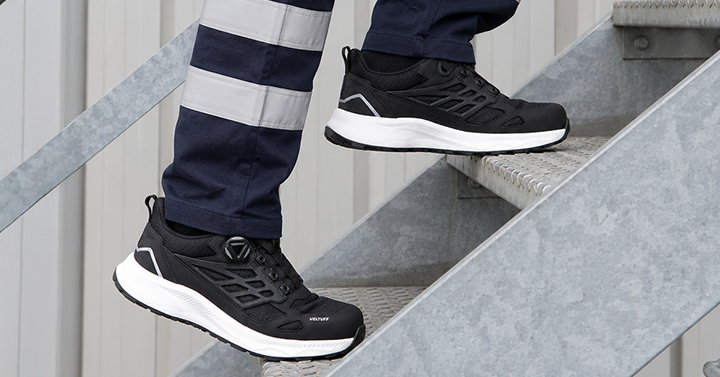

Wearing the correct safety footwear is essential when working in environments where protection against workplace hazards is required. Safety boots and safety shoes help reduce the risk of injuries caused by falling objects, sharp materials, slips, compression, and harsh working conditions.
Explore the full range of VELTUFF® Safety Footwear designed for demanding working environments.
What is EN ISO 20345:2011?
All safety footwear classified as PPE must be tested to the EN ISO 20345:2011 standard.
This certification guarantees protection against:
- Impacts of at least 200 joules
- Compression forces of at least 15kN
If an international ISO standard is adopted by the European Union, it becomes an EN ISO standard.
Understanding Safety Footwear Ratings
In addition to the minimum EN ISO 20345 requirements, safety footwear may include additional protective features depending on the working environment.
Safety Footwear Ratings
| Rating | Meaning |
|---|---|
| SB | Basic safety protection compliant with EN ISO 20345 |
| SBP | SB with penetration-resistant midsole |
| S1 | SB with energy absorption, antistatic protection, and fuel oil resistance |
| S1P | S1 with penetration-resistant midsole |
| S2 | S1 with water penetration and absorption resistance |
| S3 | S2 with penetration-resistant midsole |
| S4 | Waterproof polymer/rubber safety footwear |
| S5 | S4 with penetration-resistant midsole |
Additional Safety Footwear Abbreviations
| Abbreviation | Meaning |
|---|---|
| P | Penetration Resistance |
| C | Conductive |
| A | Antistatic |
| I | Electrically Insulating Footwear |
| E | Energy Absorption |
| HI | Heat Insulation |
| CI | Cold Insulation |
| WR | Water Resistant |
| M | Metatarsal Protection |
| AN | Ankle Protection |
| CR | Cut Resistant Upper |
| WRU | Water Penetration & Water Absorption Resistant Upper |
| HRO | Heat Resistant Outsole |
| FO | Fuel Oil Resistant |
Understanding Slip Resistance Ratings
Slip resistance is essential in many workplaces where wet, oily, or smooth surfaces may increase the risk of slips and falls.
Slip Resistance Classifications
| Rating | Meaning |
|---|---|
| SRA | Tested on ceramic tile with soap solution |
| SRB | Tested on steel with glycerol |
| SRC | Tested under both SRA and SRB conditions |
SRC is considered the highest level of slip resistance.

How to Choose the Right Safety Footwear
Choosing the right safety footwear depends on your working environment, daily tasks, and the hazards you may encounter.
Different industries require different levels of protection, comfort, and durability.
Toe Protection
Steel toe and composite toe caps help protect against falling objects and compression injuries.
Midsole Protection
Penetration-resistant midsoles help reduce puncture injuries caused by nails, sharp debris, or construction materials.
Slip Resistance
Footwear with SRA, SRB, or SRC certification can improve grip and reduce the risk of slips and falls.
Waterproof Protection
Outdoor work and harsh weather conditions may require waterproof safety boots to help keep feet dry and comfortable.
Cold or Heat Insulation
Some workplaces may require additional insulation against extreme temperatures.
Comfort and Support
Workers spending long hours on their feet should consider lightweight safety footwear with cushioning, arch support, and shock absorption.
Choosing the correct safety footwear helps improve both workplace safety and long-term comfort.
Tips for Trying on Safety Footwear
Wear the Right Socks
Always wear work socks when trying on safety footwear, as thicker socks can affect the fit.
Try Footwear on Properly
Safety footwear sizing may vary between brands and styles. Feet also naturally swell throughout the day, so it is recommended to try footwear on later in the day for a more accurate fit.
Simulate Work Movements
Walk, bend, kneel, and move naturally while trying on footwear to identify any discomfort before use.
How Should Work Boots Fit?
Work boots should provide enough room for comfort while still holding the foot securely in place.
As a general guide:
- Leave approximately 1 inch of space in front of the toes
- Ensure the heel stays secure without rubbing
- Avoid pressure points that cause discomfort
Poorly fitting safety footwear may increase fatigue and discomfort during long shifts.
Composite Toe vs Steel Toe Safety Boots
Steel Toe Boots
- Extremely durable
- Excellent impact protection
- Often heavier than composite alternatives
Composite Toe Boots
- Lightweight
- Metal-free
- Better thermal insulation
- Suitable for workers seeking increased comfort and flexibility
Common Safety Footwear Mistakes to Avoid
Even certified safety footwear may not provide proper protection if it is not used correctly.
Common mistakes include:
- Wearing the wrong safety rating for the job
- Continuing to wear damaged or heavily worn boots
- Choosing comfort over required protection
- Wearing poorly fitting footwear
- Ignoring slip resistance requirements
- Failing to inspect footwear regularly
Replacing worn safety footwear helps maintain protection, support, and workplace safety.
Industries That Commonly Require Safety Footwear
Safety footwear is widely used across industries where workers may be exposed to impact, compression, puncture, slipping, or environmental hazards.
This includes:
- Construction
- Warehousing and logistics
- Manufacturing
- Engineering
- Transport and delivery
- Agriculture
- Utilities and maintenance
- Automotive industries
- Oil and gas
- Outdoor and industrial work
Different workplaces may require different EN ISO 20345 ratings depending on the risks involved.
How to Care for Safety Boots
Proper maintenance can help extend the lifespan and performance of safety footwear.
For best results:
- Clean boots regularly to remove dirt and debris
- Allow wet footwear to dry naturally
- Avoid direct high heat when drying boots
- Inspect soles, stitching, and toe protection regularly
- Replace damaged insoles or laces when needed
- Store footwear in a clean and dry environment
Damaged footwear may no longer provide the certified level of protection.
FAQs About Safety Footwear
What are safety boots?
Safety boots are protective footwear designed to meet EN ISO 20345 standards and help reduce workplace foot injuries.
What does S3 mean in safety footwear?
S3 safety footwear includes toe protection, antistatic properties, energy absorption, water resistance, and penetration-resistant midsoles.
What is the difference between steel toe and composite toe boots?
Steel toe boots use metal toe caps, while composite toe boots use non-metallic materials that are often lighter and more thermally insulating.
What does SRC mean on safety boots?
SRC is the highest slip-resistance rating and means the footwear has passed both SRA and SRB slip tests.
Are waterproof safety boots breathable?
Some waterproof safety boots include breathable membranes to help reduce heat and moisture build-up inside the footwear.
How often should safety footwear be replaced?
Safety footwear should be replaced when it becomes damaged, heavily worn, uncomfortable, or no longer provides sufficient protection.
Can safety boots help reduce fatigue?
Yes. Comfortable safety boots with cushioning, arch support, and shock absorption can help reduce foot and lower back fatigue during long shifts.
Stay Protected with the Right Safety Footwear
The right safety footwear helps protect workers against workplace hazards while improving comfort, stability, and support throughout the day.
Understanding EN ISO 20345 ratings, slip resistance, waterproof protection, and additional safety features makes it easier to choose the right footwear for your working environment.
Explore the full range of VELTUFF® Safety Footwear designed for demanding working conditions.
Footwear Size Chart
|
UK Size |
3 |
4 |
5 |
6 |
6.5 |
7 |
8 |
9 |
10 |
10.5 |
11 |
12 |
13 |
14 |
|
EU Size |
36 |
37 |
38 |
39 |
40 |
41 |
42 |
43 |
44 |
45 |
46 |
47 |
48 |
49 |